
Orlando, Orange, Seminole and Osceola
Mold removal and water damage help in Orlando, FL
Black spots on the vents, a musty closet, a stain spreading across the ceiling after a storm? Send one request instead of calling around. A local company that serves your ZIP calls back, looks at it, and puts the scope and price in writing before any work.
- Mold removal, AC and duct mold, leaks and storm water
- Florida's mold assessor and remediator license rules, explained
- Free to you: the local company pays us for the introduction
- Typical job $1,500 to $9,000 in Fixr's national figures, priced in writing first
Free to youThe company we refer pays us
Florida license rulesAssessor and remover kept apart
Moisture firstFix the leak and the humidity
Three countiesOrange, Seminole and Osceola
Water coming in right now?
Call or text us, then do these three things in the meantime.
- Shut the water off. In most Central Florida houses the main valve is outside, near the front hose bib or in the meter box by the street. For one fixture, close the valve under it. If the AC closet is overflowing, switch the system off at the thermostat.
- Keep clear of power. Stay off wet floors near outlets and power strips. If water is near the panel or coming through a ceiling light, switch that breaker off from a dry spot, or leave it for the utility.
- Take photos before you move anything. Get wide shots, the ceiling stain, and the water line on the baseboards. Then get rugs and boxes off the wet floor.
After a hurricane or a flooded street? What to do in the first two days.
The local numbers
137
days a year with a dew point of 70°F or more at Orlando International (2016-2024 average), up from 118 a year in 1974-1990.
95
days in a row, on average, of that tropical air each summer. In 2024 the run lasted 127 days without a break.
1,829
federal flood insurance claims in Orange, Seminole and Osceola from Hurricane Ian alone, 38% of all claims on record in the three counties.
27%
of homes in Orlando's own ZIP codes were built before 1980, against 21% in the rest of the metro (Census ACS 2020-2024).
NOAA data through October 28, 2026; OpenFEMA; Census ACS 2020-2024. Look up your ZIP or read the method.
What we can help with
Six kinds of jobs, one request
Houses, condos and apartments across the three counties. For a commercial building, say so in your request.
- Mold removal and remediationRemoval by a Florida-licensed mold remediator, with the moisture and the humidity fixed first.How it works
- Mold inspection and testingWhat a licensed mold assessor does, when testing is worth paying for, and why the assessor can't sell you the removal.How it works
- AC, duct and vent moldBlack dust on the vents, a musty air handler closet, a clogged drain line. The system that should be drying the house.How it works
- Water damage restorationSupply line bursts, water heater leaks, AC overflow. Extraction and drying before mold starts.How it works
- Roof leak and ceiling moldStains after a storm, wet attic insulation, sagging drywall. Stop the water, then the cleanup.How it works
- Storm and flood cleanupAfter a hurricane or a flooded street: what has to come out, and the flood policy catch.How it works
Florida Statutes, Chapter 468, Part XVI
Two licenses, kept apart
- Assessment. A mold assessor inspects, samples and works out where the growth is, how far it goes and where the moisture comes from. Done for pay on growth over 10 square feet, it takes a state mold assessor license. (Sections 468.8411 and 468.8419.)
- Remediation. A mold remediator removes, cleans or treats the growth. Over 10 square feet, for pay, that takes a state mold remediator license, plus a construction license for any work that needs one. (Section 468.8411.)
- The 12-month rule. An assessor's company may not remediate a structure it assessed in the last 12 months, and a remediator's company may not assess a structure it remediated in the last 12 months. (Section 468.8419.)
Homeowners working on their own property are exempt (section 468.841). Assessors and remediators must carry at least $1 million in liability coverage (section 468.8421), and contracts must be in writing (section 468.8422). Not legal advice. The full rundown.
Why this matters here
Florida licenses mold work, and splits it in two
Under a law first passed in 2007, anyone paid to assess or remove more than 10 square feet of mold needs one from the Department of Business and Professional Regulation, and the two jobs are kept apart: the company that tells you how bad it is can't be the company paid to fix it, at least not for a year.
That rule exists because "you need $12,000 of remediation" is an easy sentence to say when you're the one who'd do the $12,000 of remediation. It also means a mold inspection offered by the company that wants the removal job isn't the independent check it may sound like.

What we ask of every company we refer
The four things to expect
Mold jobs go wrong in predictable ways, usually a missing scope or a leak nobody fixed. We ask for these up front. If a visit falls short, tell us at (407) 584-8685.
- The Florida license, on request. Paid mold remediation over 10 square feet takes a state mold remediator license from the DBPR. Ask for the number and look it up on myfloridalicense.com.
- A written contract. Florida law says mold assessment and remediation contracts have to be in writing and signed. It should list what comes out, what gets cleaned, how the area is contained, and the price.
- The water and the humidity fixed. Mold comes back when the roof leak, the AC drain or the indoor humidity stays the same. The scope should name the cause and who fixes it.
- A clearance check by someone else. If you want testing after the work, it comes from a licensed assessor, not the company that did the removal. Florida bars a remediator from assessing its own job for 12 months.
Before anyone quotes you
What this work usually costs
Published national ranges, not an Orlando quote. The company prices your job in writing before any work starts.
Already holding a quote? Check it against what a written mold scope should list.
| Job | Published range | Source |
|---|---|---|
| Mold remediation, typical job | $1,500 to $9,000, $3,500 averageFixr, Aug 2025 | Fixr, Aug 2025 |
| Per square foot | $10 to $30 per square footFixr, Aug 2025 | Fixr, Aug 2025 |
| HVAC system mold | $3,000 to $10,000Fixr, Aug 2025 | Fixr, Aug 2025 |
| Attic mold | $1,500 to $9,000Fixr, Aug 2025 | Fixr, Aug 2025 |
| Whole house | $10,000 to $30,000Fixr, Aug 2025 | Fixr, Aug 2025 |
| Mold inspection | $450 to $800, $500 averageFixr, Jan 2025 | Fixr, Jan 2025 |
| Water damage restoration | $1,200 to $5,000, $3,000 averageFixr, Jan 2025 | Fixr, Jan 2025 |
National published figures from Fixr, not Orlando averages and not a quote. On a Florida job over 10 square feet, the assessor who writes the plan is a separate licensee, paid separately.
Original analysis of NOAA data
Why Orlando houses grow mold
It's the air. From June through September the dew point at Orlando International sits at 70°F or above on about 113 of the 122 days, and July and August average 73.8°F and 74.5°F. Air that wet carries enough water that anything indoors cooler than the dew point collects it: a supply vent, the back of a closet on an outside wall, the drywall above an air handler.
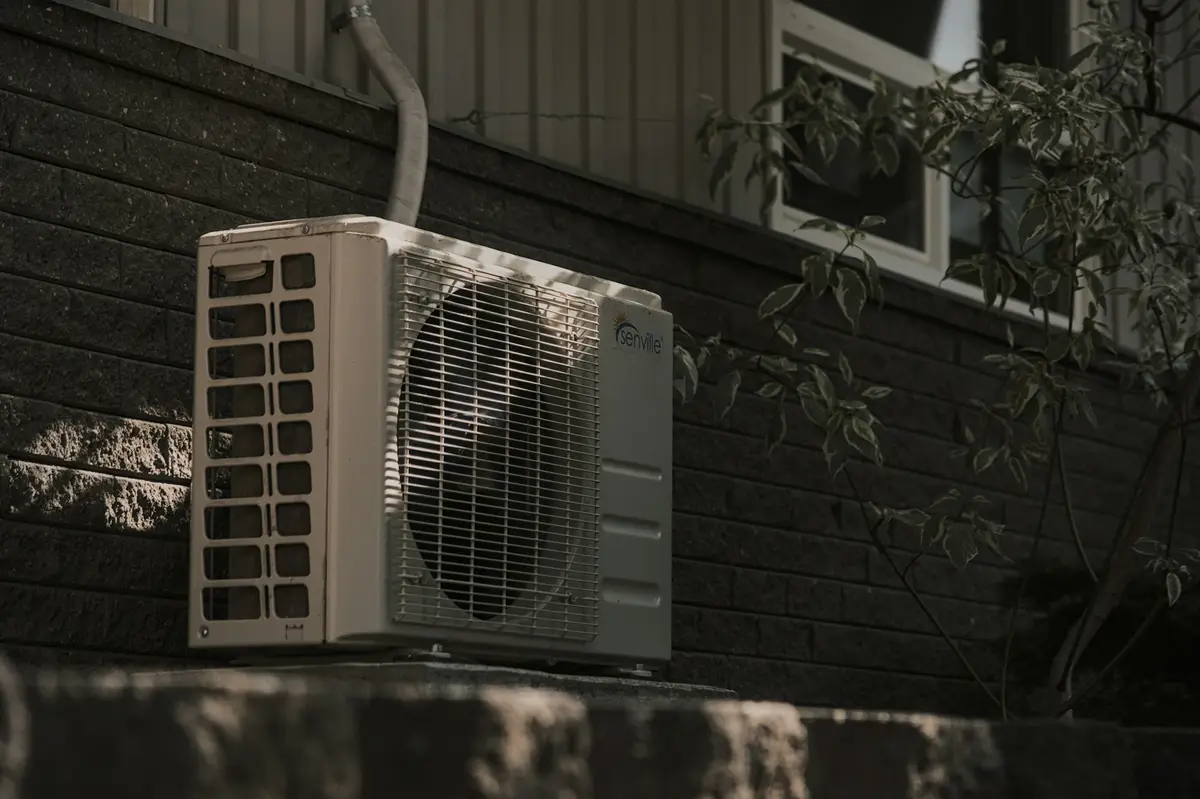
The air conditioner is the dehumidifier. When it's oversized and short-cycles, when the thermostat is set to 82°F to save money, or when the house sits closed with the AC off while the owners travel, indoor humidity climbs past 60%, and mold follows within weeks. That's why so many Orlando mold calls start in the AC closet.
Then the rain: 50.9 inches a year, 59% of it in the wet season, with about 14.5 days of an inch or more. A roof with a lifted shingle or a cracked boot flashing leaks every afternoon for a month before anyone sees a stain. Why Orlando homes get moldy.
Days with a dew point of 70°F or more, by month
Average rain by month, Orlando International Airport (inches)
Housing age and storms, by ZIP code
Across the 64 ZIP codes we cover in Orange, Seminole and Osceola, about 24% of 963,905 homes were built before 1980. The oldest is 32805 (Parramore and west of downtown), at 74%, followed by 32806 (Delaney Park and Lake Como, 73%), 32730 (Casselberry south, 68%), 32804 (College Park, 67%). Older houses here mean original ductwork, galvanized and cast iron drain lines, and roofs on their third or fourth replacement.
Hurricane Ian in September 2022 dropped 7.72 inches on the airport in one day, the wettest day in its record, and 13.1 inches over two. It produced 1,829 federal flood claims in the three counties, more than any other storm here. The most came from 34744 (Kissimmee east, 154), 32822 (Conway east, 114), 32765 (Oviedo, 109).
Federal flood claims from Hurricane Ian, by ZIP (top 14)
Read before you call
Plain answers, with sources
Written for Orlando-area homeowners and renters. Each guide lists its sources at the bottom.
- What mold removal costsPublished ranges by job, plus the separate assessor fee.
- Florida's mold license lawAssessor, remediator, the 12-month rule, and who is exempt.
- Is this mold quote fair?What a written scope should list, and the signs a quote is padded.
- Why Orlando homes get moldyDew point days, summer rain and AC that can't keep up, from NOAA data.
- Mold in an Orlando rentalFlorida's landlord duty, the 7-day notice, and the city's code inspections.
- Does insurance cover mold in Florida?Sudden vs slow water, the mold limit, flood policies and the 2023 AOB change.
- Black mold, plainlyWhat the color means, what it doesn't, and what to do about it.
- Cleaning mold yourselfWhen a small patch is a DIY job, and what not to spray.
- Keeping an Orlando house dryThermostat settings, dehumidifiers and the AC habits that stop mold.
- Buying a house with moldInspection findings, Florida disclosure, and what to ask before closing.
Areas we cover
Orlando and the towns around it
- Winter Park32789 32792
- College Park32804
- Pine Hills32808 32818
- Dr. Phillips32819 32836
- Lake Nona32827 32832
- Kissimmee34741 34744 34746 34743
- Sanford32771 32773
- Altamonte Springs32714 32701
- Oviedo32765 32766
- Apopka32703 32712
- Winter Garden34787
Also every Orlando neighborhood from Audubon Park to Hunters Creek, plus Maitland, Casselberry, Winter Springs, Lake Mary, Ocoee, Windermere, St. Cloud and Poinciana.
Questions Orlando homeowners ask
How much does mold remediation cost in Orlando?
Fixr's national figures put a typical mold remediation job at $1,500 to $9,000 (about $3,500 on average), or $10 to $30 per square foot. Mold in an AC system runs $3,000 to $10,000, an attic $1,500 to $9,000, and a whole house $10,000 to $30,000. In Florida, an assessor who looks at the job before or after cannot also be the company that removes it, so budget for that visit separately.
Does Florida require a license for mold removal?
Florida licenses mold work under Part XVI of Chapter 468 of the Florida Statutes, run by the Department of Business and Professional Regulation. Assessing or remediating mold growth larger than 10 square feet for pay takes a state license: mold assessor or mold remediator. An assessor may not remediate a structure it assessed in the last 12 months, and a remediator may not assess a structure it remediated in the last 12 months. Homeowners working on their own property are exempt.
Does homeowners insurance cover mold in Florida?
Sometimes. Mold that follows a covered sudden loss, like a burst supply line, is often covered up to a mold limit written into the policy. In December 2002 Florida regulators approved what became the standard endorsement capping mold at $10,000 per occurrence, and many policies still carry a mold or fungi limit, so read that section. Mold from a slow leak or long-term humidity usually is not covered. Rising flood water needs a separate flood policy. On policies issued since January 1, 2023, you can no longer sign your claim benefits over to a contractor.
Why does my Orlando house keep getting mold?
Usually humidity, not a single leak. The airport averages 137 days a year with a dew point of 70°F or more (2016-2024), nearly all of them June through September. If the AC is oversized, set high, or off while you travel, indoor humidity climbs past the point where mold grows on cool surfaces, closets and vents. Fix that, and most recurring mold stops.
Who will come to my house?
An independent local company that serves your ZIP. Orlando Mold Desk is a referral service; we pass your request along so you don't have to call around. For growth over 10 square feet, paid mold remediation in Florida takes a state mold remediator license, and you can ask for the number before anyone starts.
Fix the water, then the mold
One request, one local company, the scope and price in writing before any work.